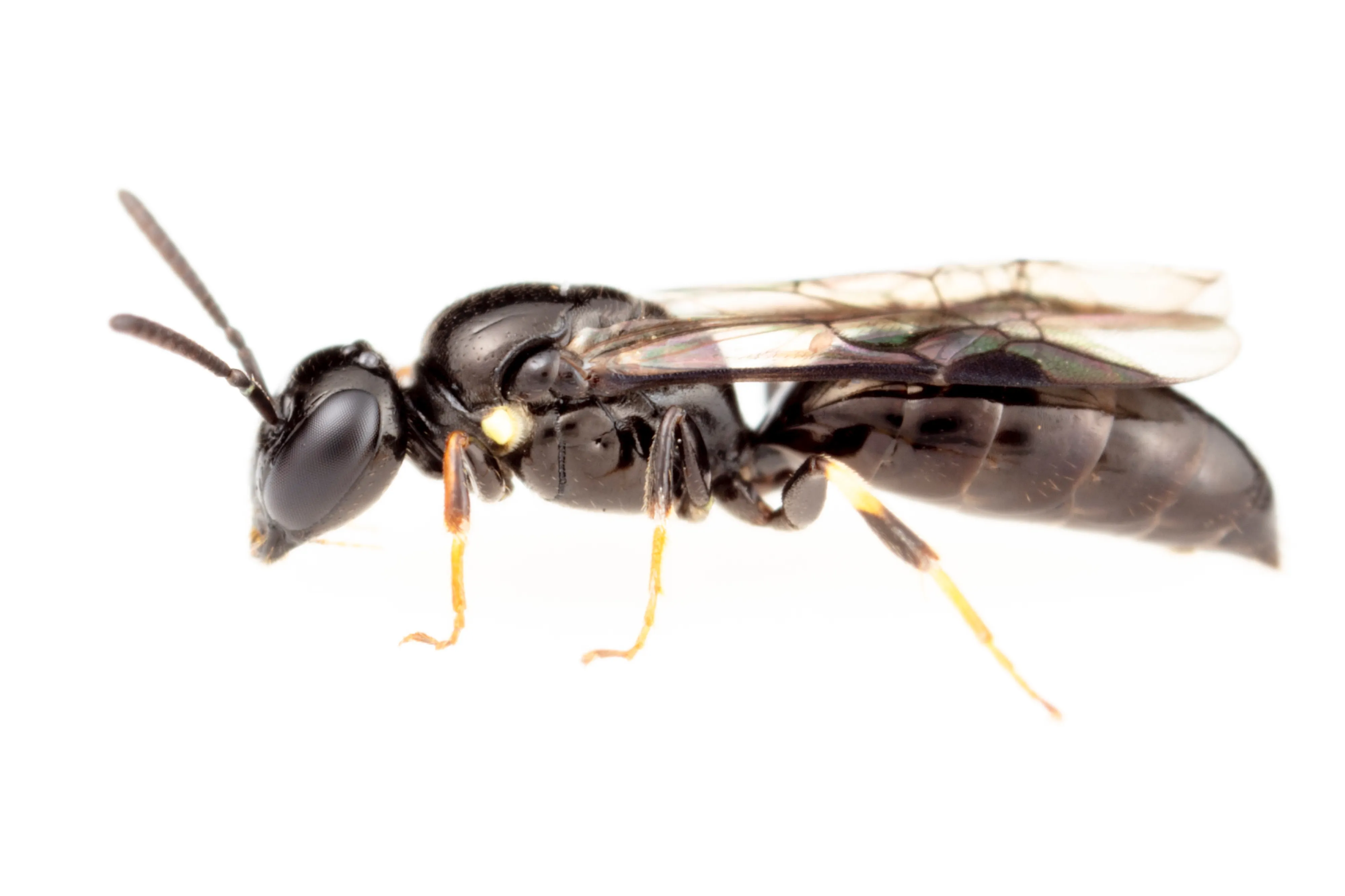
I'm very proud of my Honours student, Tegan Edwards for publishing her first first-author paper this week in Ecology and Evolution!
She researched on Fiji's canopy-dwelling Hylaeus and worked incredibly hard to find these bees and to then untangle the story that followed...
doi.org/10.1002/ece3...
I really appreciate that the Nobel folks do the science communication thing of releasing different explanations of the winners' work for people with different pre-existing levels of understanding
nobelprize.org/all-nobel-prize…
both "They solved chemistry’s asymmetric mystery" and "Non-linear effects and auto catalysis in asymmetric organic catalysis"
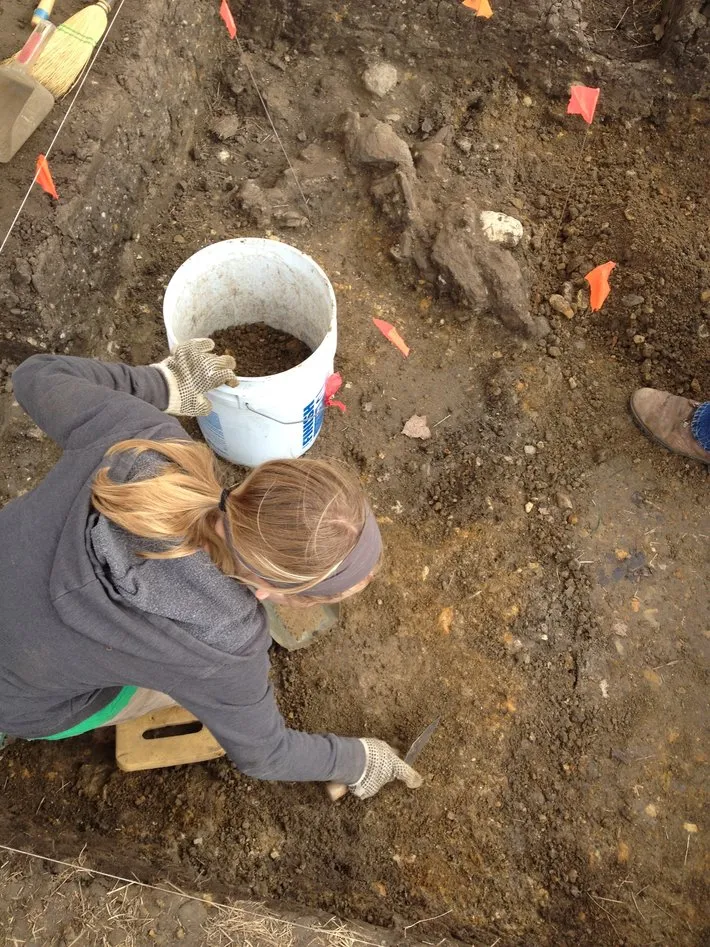
Fun SK fact while I'm thinking about mastodon excavation-- I got to help excavate a mastodon when I was a wee baby (20 years old)!
My youngest sister was part of a professional archaeology and paleontology club at the time (she's now a bioanthropology student) and I went along just to see it
I got to see the #Chemistry#Nobel medal - this one from 1998 to John Pople ( "for his development of computational methods in quantum chemistry" ) - on display next to the podium at the Pople lecture today - by Prof. Martin Head-Gordon (UC Berkeley) who was a PhD student with Pople in end 80s-early 90s.
The medal is here at CMU, donated by Pople's kids.
#ProfLife
A science topic I wrote about endlessly back in the early 90s when I first started out in science writing was nature's handedness...and today...that very topic earns a Nobel Prize. Amazing. Almost feels like I was there...
Small Triassic Dinosaur from Brazil Sheds New Light on Sauropodomorph Growth Strategies.
Tiny bones from an early sauropod suggest it may have adopted flexible growth strategies - a finding that could help explain the later emergence of gigantism in this group.
Analysis suggests ontogenetic features of a juvenile sauropodomorph with a single growth arrest - providing evidence for novel growth strategies during the early evolution of this group.
sci.news/paleontology/small-tr…
Today’s role model of science is Richard Owen: Scooby Doo villain archetype, coiner of the word “dinosaur.” Described as "social experimenter with a penchant for sadism. Addicted to controversy and driven by arrogance and jealousy”
"a damned liar. He lied for God and for malice” “An odious man.”
Longest mouse brain axon ever reconstructed: 70 centimeters long.
With a soma in the Locus Coeruleus, this neuron releases norepinephrine over most of the brain but specifically skips the cerebellum, brainstem, and spinal cord.
Very readable and accurate press release: alleninstitute.org/news/out-of…
The paper:
"Topographic structure and function of locus coeruleus noradrenaline neurons", Su et al. 2026 (Jeremiah Cohen's lab)
nature.com/articles/s41586-026…#neuroscience#mouse#norepinephrine
Wooden tools crafted by Neanderthals at hunting sites have been found before. For the first time, there's now evidence from a domestic context too. “We know what was happening in the kitchen, in the sleeping areas,” says @iphes-cerca.bsky.social's M. Gema Chacón. “It’s like a snapshot.” @science.org
On October 7, 1959, Luna 3 gave us our first look at the far side of the Moon. Today, NASA released the preliminary science reports from Artemis II.
Here's my visual history of lunar far side exploration, which puts both Luna and Artemis into context:
#history#science#technology#photographyinvertingvision.com/2026/04/06…
Solar Orbiter tracks the origin of the Sun's mysterious magnetic switchbacks ☀️
Back in 2022, Solar Orbiter spotted a kink in the solar wind’s magnetic field known as a ‘switchback’ and confirmed it to be S-shaped: something scientists had predicted but not seen directly.
🔭 🧪
Brooks et al. describe an intelligent microscopy system for imaging rare events in live cells.
New paper in JCS from Bretschneider, McAinsh and Burroughs groups.
CelFDrive: Multimodal deep learning-assisted microscopy for automated detection of rare events
doi.org/10.1242/jcs.265029#microscopy#cellBiology
Unexpected co-circulation with divergent regional distribution patterns: researchers from Germany report the detection & genomic characterisation of a second clade of Shamonda virus SHAV in #Europe following the incursion of the SHAV-EU1 clade earlier this year
#IDSky#EpiSky#AnimalHealth 🛟🧪🧫
After spending time recently in the boreal forest, and describing what I saw there as “billions and billions of wilderness,” I’m ready to believe that Black Spruce is the dominant species on earth by mass
signoregalilei.com/2026/09/27/…
It's #Spacetober day 8, supernova.
The searing explosion of a Type Ia supernova marks the end of a white dwarf's life. Its companion star, from which it was accreting gas, is ejected in the event. It will forever speed through space like a cosmic pinball.
#SciArt#spaceart
Cool work on slow evolving lineages, aka "living fossils". I like the contrast between the morphologically conserved lineages and control species-poor lineages.
Sad not to see amphioxus included though.
biorxiv.org/content/10.64898/2…#EvoDevo#Phylogenetics
In 1969, just before Apollo 11 was about to land on the moon, an emergency alarm rang.
“Our astronauts didn’t have much time, but thankfully they had Margaret Hamilton,” said Barack Obama as gave her the Presidential Medal of Freedom in 2016.
#womeninsciencewww.theguardian.com/science/2026...
Margaret Hamilton is rightly remembered for her work programming the flight computers for Apollo.
But she should also be remembered for her work on early weather prediction software, which informed the realization that weather is chaotic and the limits to predicting it.
news.mit.edu/2026/margaret-ham…
A titan of science, engineering & space exploration has passed on. Margaret Hamilton programmed the computers & nav systems for the Apollo programme. When women faced discrimination in every workplace, she led a team of 100 engineers at NASA.
edition.cnn.com/2026/10/07/s...
For #ProjectHailMary fans: Scientists have found an amoeba that survives and reproduces at RECORD HIGH TEMPERATURES up to 63 C or 145 F. Not Astrophage but might feel kind of at home on Eridani.
#science#microbiology
Found in thermal hot springs creek in California. Link to paper in comments.
Brilliant research by Katie, a greatly deserved award. Her work also highlights the importance of wild species to people in the past which is often overlooked. #Archaeology#Orkney
"How can we learn to recognize — and communicate with — unconventional intelligences in cells, tissues and other unfamiliar substrates?" -Michael Levin, developmental and synthetic biologist, Tufts University and @wyssinstitute.bsky.socialwww.nytimes.com/2026/10/05/s...
All welcome
Tues Oct 13, 18:30 London 🌒
@uclanthropology
'The Fire of the Jaguar: Problems with perspectivism'
Chris Knight
Across Amazonia, myths hold that in early times it was the jaguars, parrots, tapirs and other animals who first invented bows and arrows, cooking fire, ceremonial buildings, religious ceremonies and other complex cultural accomplishments. Then humans stole these things from the animals, elevating themselves above all other creatures – but at the cost of losing their former ability to engage in easy conversation with the animal world. This mythic view of our origins is the reverse of the Darwinian narrative which our own culture holds up as science.
Show more of this post
In this talk, Chris will introduce a recent trend in social anthropology – known as ‘perspectivism’ – and discuss whether such radically different ways of perceiving our origins and place in nature can be made to converge.
#Amazon#cosmology#perspectivism#gender
LIVE in Daryll Forde, Room 230 2nd Floor, UCL Anthropology Dept, 14 Taviton St, WC1H 0BW and ZOOM ID 948 6108 7055 passcode Wawilak
I got to see the #Chemistry#Nobel medal - this one from 1998 to John Pople ( "for his development of computational methods in quantum chemistry" ) - on display next to the podium at the Pople lecture today - by Prof. Martin Head-Gordon (UC Berkeley) who was […]
[Original post on mastodon.online]
"1,000-mile-long cloud that forms and vanishes on Mars every day obeys 'exotic physics' never seen on Earth" by @LiveScience - Mysterious 1000mi/1600km+ long cloud that forms daily in #Mars spring & summer now has a theory how it forms. It's from orographic lift over the ancient dead volcano Arsia Mons. But it isn't quite that simple - it should be impossible in the thin atmosphere almost devoid of water vapor. livescience.com/space/mars/1-0…#space#weather#planetary#science#spacegeek#astronomy
The 2011 Tohoku tsunami led freshwater and marine sticklebacks to interbreed. Nine years of genome monitoring show the marine species' alleles were purged within a few generations, first at loci for reproductive isolation, then across the genome except at several loci.
#evolution#genomics
During the big Kumamoto earthquake earlier this year, there was a field right at the fault line where you could see on a security camera how the ground went up a meter right before your eyes.
Last week they harvested the field under the supervision of the local university, revealing the ground underneath for study
youtube.com/watch?v=dYOz_KdmEX…#japan#earthquake
"...modern humans and Neanderthals shared the European landmass for 2,600 to 5,400 years—roughly twenty to forty human generations longer than the entirety of recorded human history from the building of the Great Pyramid of Giza to the launch of the James Webb Space Telescope."
An amazing read:
I've been thinking about making an exoplanet orrery, because ultra-short period planets could fix the biggest problems with orreries: scale. It really bugs me that you can't (practically) show the planets and their orbits and the sun all on the same scale in our system. Plus, the orbital periods are all so long you'll never even see the movement of some of the outer planets!
Ultra-short periods systems solve all of this, including letting them run in real time... except the ones we know of aren't very interesting. Either I can have a single hot Jupiter (0.8 day period), which is boring except for its size, or I can have a couple rocky planets (0.8, 4.2 and 9.0 day periods) that are still only barely visible pinheads, even the one that is 12x the size of Earth. I'm leaning to the later, but maybe I should just wait another couple years to see if anything more interesting turns up.
In early 2007, a power outage damaged some parts of the GEO600 control system.
This included some electrical charges building up on the surface of the GEO600 mirrors. Attempts to remove the charges by ultraviolet irradiation of the mirror or by increasing the pressure in the central cluster of the vacuum system did not work out well enough, so opening the vacuum tanks to do some repair work was required.
More in the GEO600 Diary entry from 2007: geo600.org/26587/february-2007#GEO600Highlights#GEO600#Research#ScienceHistory#GravitationalWaves
There are currently 5 women in space, from 4 nations, and somehow 2 are named Jessica.
This ties with a prior record.
ISS Crew:
Sophie Adenot (France)
Jessica Ulrika Meir (USA)
Jessica Andrea Watkins (USA)
Anna Yurevna Kikina (Russia)
Chinese Space Station Crew:
Lai Ka-ying (China)
My first postdoc paper with Erin Mordecai is out! We explore the eco-epi of WNV across the US, grounded in disease ecology principles.
royalsocietypublishing.org/rsbl/article...
Rising numbers of Asian and African PhD students choose to study in China (and I think that makes a lot of sense because China has been solidly investing in science and technology) nature.com/articles/d41586-026…
Student scientists honor their mothers by naming a 309-million-year-old amphibian fossil after them.
Evidence: Scientific discovery, Mazon Creek fossil, Women in Science interns
#Paleontology#Science#GoodNews
Science Learning Center: Visual Challenges for Texas Grades 6–8
Visual Challenges for Science includes 15 illustrated questions for grades six through eight. You can use them on a classroom display, let students work through them in a browser, or print the posters for discussion.
mguhlin.org/blog/2026-10-03-sc…
Postdoctoral Researcher – Viral Mimicry, Innate Immunity & Interactomics
University of Nebraska Medical Center
Postdoc studying viral mimicry and innate immunity using biochemistry/interactomics; CRISPR and iPSC expertise especially valued.
See the full job description on jobRxiv: jobrxiv.org/job/university-of-…...jobrxiv.org/job/university-of-…
To explain how orbiting charged electrons didn’t lose energy and annihilate spectacularly with the so-called “spiral death” (physicists are big on melodrama, I’m telling you), he stipulated that perhaps they simply weren’t allowed anywhere but the specific orbits. They could lower their energy state if excited by falling to a lower orbit, giving off a specific photon of a specific colour related to the difference between energy levels.🧵2/
A new Handbook of Evolutionary Psychology has just been published, in which it is claimed that the human species is polytypic: not only is race biologically meaningful but the races are distinct enough to be considered subspecies. Published by Elgar. In 2026.
📣 Attention R and python users! 🐸 The latest versions rgbif (3.9.0) and pygbif (0.7.0) have now be published!
These new version introduce potentially breaking changes 💔 as the default taxonomy has shifted from the GBIF Backbone Taxonomy to the Catalogue of Life Extended Release.
For more information, check out the migration guide:
🔗data-blog.gbif.org/post/rgbif-…
rgbif | 🔗 docs.ropensci.org/rgbif/news/i…
pygbif | 🐍 pygbif.readthedocs.io/en/lates…
We had the opportunity to talk to Ben Feringa, the 2016 Nobel Prize Laureate in Chemistry, at the SusMax Workshop in Berlin. @feringalab.bsky.social
He talks about originality in research, interdisciplinary networks like SusMax, and the molecular design challenges behind sustainable materials. ⬇️⬇️
3/3 🧭 How to use it for an investigation.
Choose a named reference. Read “What this tests”. Save a comparison point, change one control and inspect the curves together with their scales, assumptions and convergence diagnostics.
💾 Keep the result: experiment JSON with inputs, numerical arrays and provenance; SVG figures; model cards, LaTeX and links that preserve controls. Four archived batch studies provide worked examples. Saved external results must match the current inputs before the laboratory displays an experimental verdict.
Show more of this post
🎥 The complete walkthrough is available in English and Spanish: 43 chapters in each language, covering every menu section, the three Simulator modes and the embedded experiments, with captions, transcripts and downloads. The narration is synthetic; the demonstrations use the real interface.
karlesmarin.github.io/ghu-expl…
The browser calculations and stored references work offline. New HiggsTools or PhaseTracer points use the optional local engine.
Results distinguish theorem, verified, measured and unknown. The SU(7) absolute scales retain the published-alpha mismatch caveat; computed scenario values are not experimental measurements. Independent checks and reproduction commands travel with the source:
github.com/karlesmarin/ghu-lab
I would like eyes on it from people working on these models: what is wrong, what is missing, and what should it compute next?
🔗 GHU Lab:
karlesmarin.github.io/ghu-expl…#OpenScience#MathematicalPhysics
Join us to explore whether transposable elements can be harnessed to uncover new immunotherapy targets for childhood AML. A fully funded PhD combining cancer genomics, epigenetics and immunology, with access to unique paediatric AML patient datasets and samples. Join us at Barts Cancer Institute! 👇
Neanderthal Wood Tools Almost Never Survive — A Spanish Cliff Has Preserved Spears, Bowls and a Club With No Known Match www.labrujulaverde.com/en/2026/10/n...
🌔 Landing on the Moon is harder than it looks.
📸 @esa.int’s LandCam-X camera will capture imagery during a real lunar landing to help engineers improve the navigation technologies needed for safer, precise landings.
🔗 Find out more: www.esa.int/Science_Expl...
 View full-size image